

Leaking Children’s Data Incurs Enormous Costs
There is an increasingly complex alphabet soup of state child data laws — CAADCA, CTDPA, CPA, FDBR, DPDPA, OCPA — to ensnare companies, while FTC COPPA settlements have exceeded $100M. Vault helps you identify unauthorized collection of children’s data, monitoring web, mobile, and third-party apps for nonconsensual disclosures and violations.

Jam City Settles $1.4 Million CCPA Violation
Mobile app gaming company Jam City paid California $1.4 million under the CCPA to settle claims failing to offer users opt-out methods for the sale or sharing of personal data.

Disney Paid a $10 Million COPPA Fine
Disney agreed to pay $10 million after regulators said it failed to properly label child-directed YouTube content, enabling data collection and targeted ads without parental consent.

HyperBeard Fined for Illegally Tracking Children
HyperBeard, a developer of popular kids’ apps, drew COPPA enforcement after allowing third-party ad networks to collect persistent identifiers from children without proper parental consent.
How Vault JS Supports Compliance with Children’s Data Laws

Detect Legally Actionable Data Leaks
Vault detects unconsented collection or sharing of children’s personal data.

Monitor Trackers in Child-Directed Experiences
Vault audits third-party scripts for the collection of children’s personal information.

Maintain Compliance with Children’s Privacy Laws
Stay ahead of new and evolving state laws on consent requirements.

Provide Audit-Ready Third-Party Verification
Get reports on children’s data collection, handling, and consent.

Reduce Risk of Enforcement and Reputational Harm
Ensure tracking aligns with parental consent and child-protection standards.
Key Children’s Data Compliance Capabilities
Children’s Data Detection Engine
Vault detects the collection of children’s personal information, including names, email addresses, persistent identifiers, device IDs, and geolocation, transmitted via network requests, URLs, cookies, or SDK calls before verifiable parental consent is obtained.
Tracker and Script Monitoring
Monitoring pinpoints where DTTs (Digital Tracking Technologies) like Meta Pixel, analytics scripts, ad tags, or embedded SDKs collect or transmit children’s personal information on child-directed pages, games, learning platforms, or mobile apps subject to COPPA.
Simulated User Flows
Vault simulates real user flows, such as completing forms, entering birthdates, logging in, or finishing checkout, and analyzes all data transmission technologies (DTTs) activated during those interactions to detect the collection, enrichment, or disclosure of personal information via network requests, APIs, cookies, pixels, or SDK calls.
Parental Consent-State Testing
Vault simulates user sessions under various age and consent scenarios (e.g., under 13, parental consent granted, consent denied) to verify whether data collection and third-party tracking are properly gated and restricted.
Continuous Alerts and Fix Guidance
Your teams are alert to children’s data privacy violations, such as pre-consent tracking or unauthorized data sharing, as they occur. Vault also supports integrations that immediately suppress or disable risky tags, pixels, or SDK behavior.
Cross-Platform Visibility
Unified monitoring provides visibility across child-directed websites, mobile apps, embedded video players, and backend systems to ensure children’s personal information is not collected, shared, or retained in violation of COPPA or state youth privacy laws.
Vault JS Compliance Management Resources
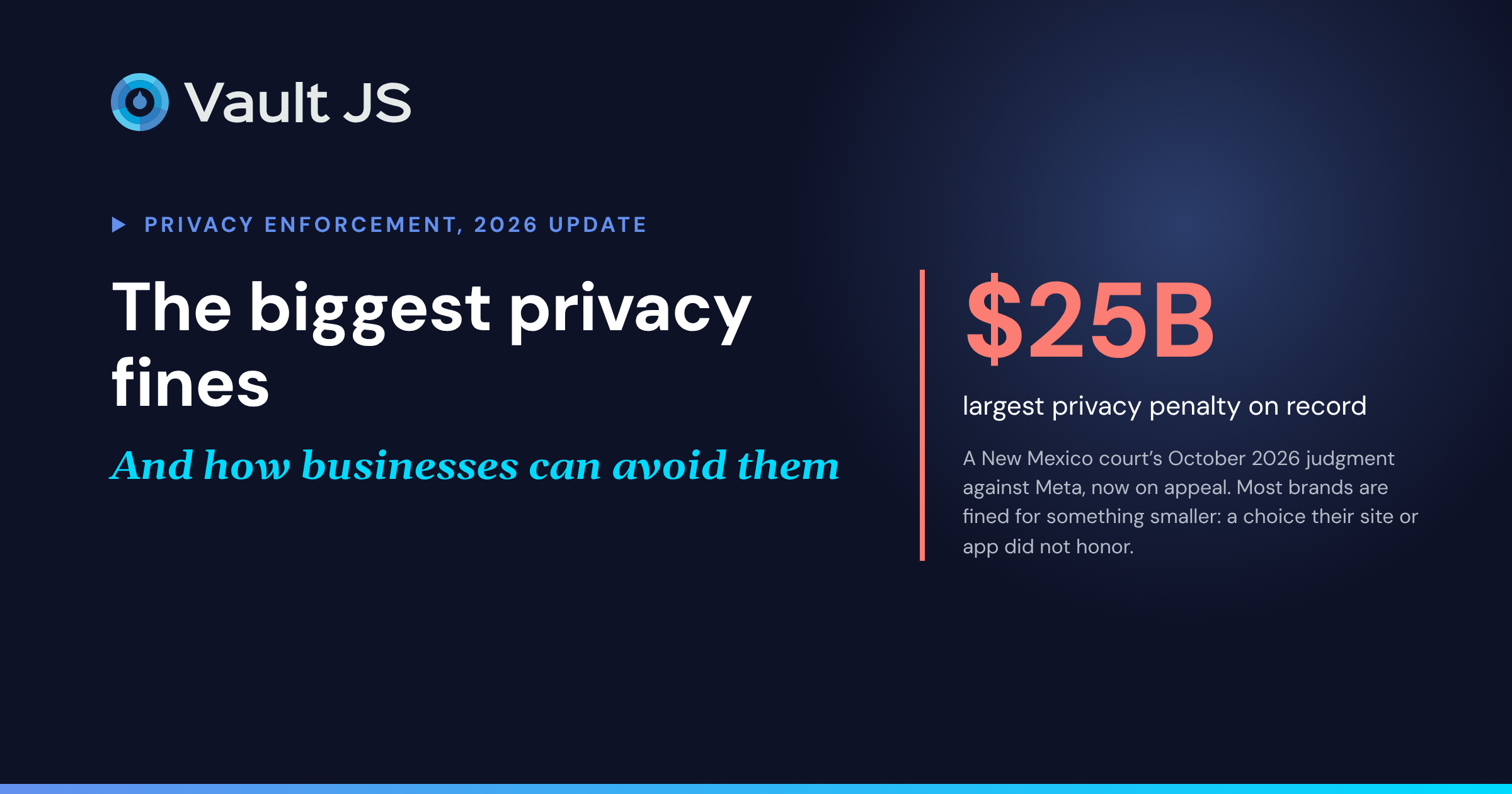
What Are the Biggest Privacy Fines and How Can Businesses Avoid Them?
The largest privacy fines and settlements on record, updated through November 2026, plus the smaller actions against ordinary brands over how their websites and apps...
Read More
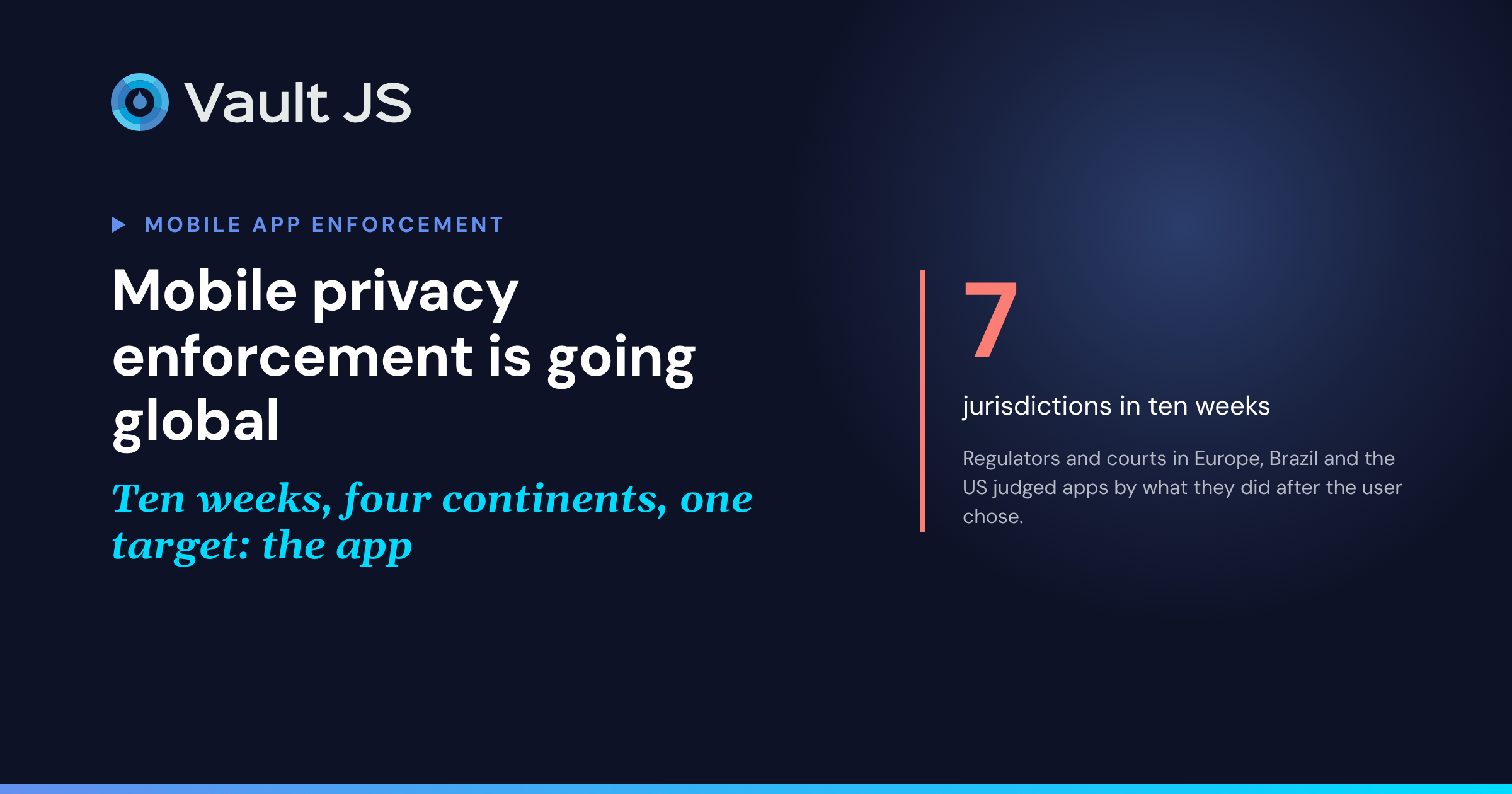
Mobile privacy enforcement is going global
In ten weeks, regulators and courts in seven jurisdictions judged mobile apps by what they did after the user made a choice. What FNAC, BBVA,...
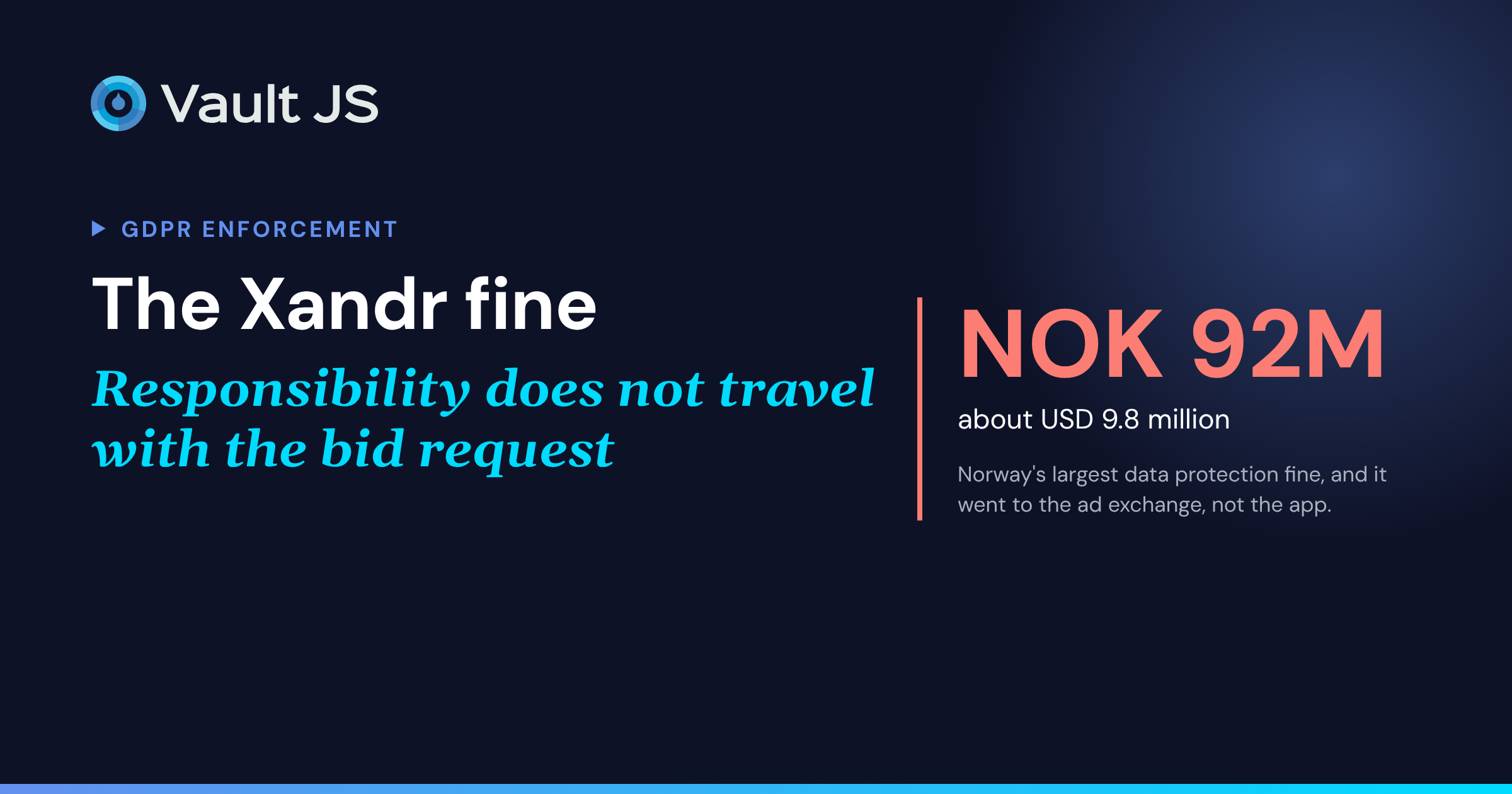
The Xandr fine: responsibility does not travel with the bid request
Norway's largest data protection fine went to the ad exchange, not the app. Why Xandr's assumed-consent defense failed, and what app owners should check this...