

Privacy Violations Add to Rising Healthcare Costs
In 2023, the FTC and HHS warned 130 hospital systems and telehealth providers that online tracking technologies could cause illegal sharing of Personal Health Information (PHI). Vault helps you identify unauthorized health data collection and sharing across all your websites, mobile apps, and third-party technologies.

DTTs Cost Aurora Health $12 Million
Aurora Health paid $12.25 million to resolve a class-action suit over the impermissible disclosure of patient data to third parties via a pixel-enabled leak.

Kaiser’s $47 Million Tracker Settlement
Kaiser Permanente agreed to a $47.5 settlement for allegations that DTTs on its websites and mobile apps potentially shared patient access data with third parties.

GoodRx Fined $1.5M for Sharing Health Data
The FTC fined GoodRx $1.5 million for allegedly sharing users’ health information with Facebook, Google, and others without specific, informed consent or breach notifications.
How Vault JS Supports Compliance with Health Data Laws

Prevent Legally Actionable Data Leaks
Vault detects when health data is shared without consent.

Monitor Trackers in Patient-Facing Tools
Vault audits all third-party scripts that may access PHI.

Maintain Compliance with Health Privacy Laws
Stay ahead of HIPAA and state laws like MHMD and CCPA.

Provide Audit-Ready Evidence
Get detailed reports on all regulated health data actions.

Reduce Risk of Class Actions and Reputational Harm
Stay out of the headlines. Ensure behavior matches the law.
Key Health Data Compliance Capabilities
PHI Detection Engine
Vault identifies both structured and inferred PHI transmitted through network requests, URLs, cookies, headers, and payloads. Real-time analysis determines when sensitive data may be exposed to third parties or misconfigured vendors.
Tracker and Script Monitoring
Vault continuously maps and monitors third-party scripts, pixels, tags, and embedded SDKs across websites and mobile apps. By detecting unauthorized collection, Vault gives your teams time to act, reducing regulatory risk.
Consent-State Testing
Vault simulates real patient sessions under multiple consent scenarios, verifying whether tracking technologies respect consent signals and preventing unauthorized transmission of health-related information.
Real-Time Alerts and Blocking
Vault detects noncompliant data collection, unauthorized third-party transmissions, and consent misconfigurations. It generates immediate alerts so you can suppress or disable risky scripts, pixels, or SDKs before sensitive health data is exposed.
Cross-Platform Visibility
Vault delivers unified compliance monitoring across websites, patient portals, mobile apps, and backend services. It correlates frontend tracking with server-side data flows to provide a complete view of sensitive health information across digital environments.
Vault JS Compliance Management Resources
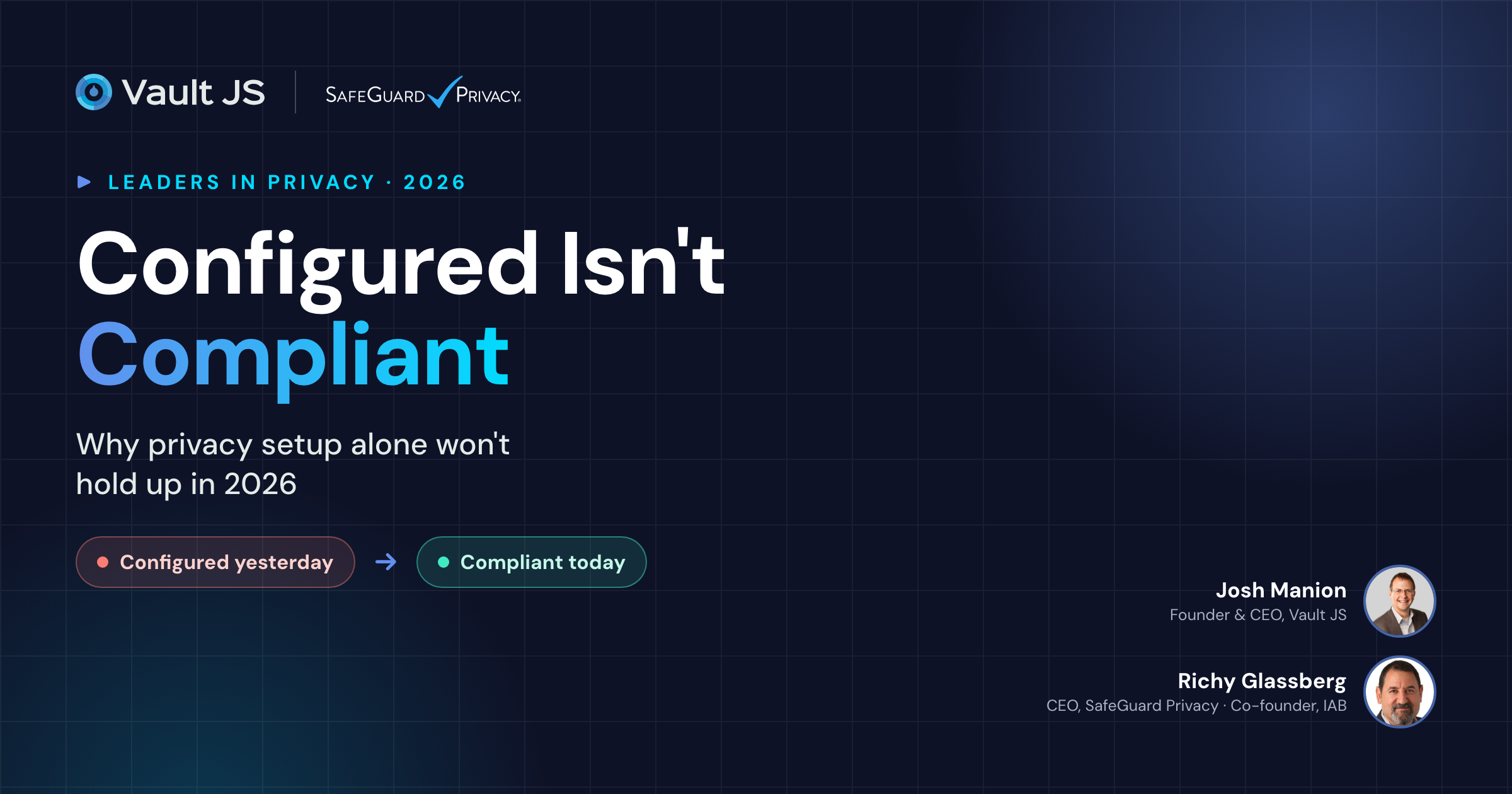
Configured Isn’t Compliant: Why Privacy Setup Alone Won’t Hold Up in 2026
In 2026, regulators test whether your privacy setup actually enforces consent. This blog recaps the webinar with Josh Manion and Richy Glassberg, CEO of Safeguard...
Read More
Mobile App Privacy: Why it isn’t the same as website compliance
Mobile apps inherited the privacy policy but almost none of the technical scrutiny. One enterprise app ran at just 18.4% policy compliance. Here's the framework...
Read More

Why We Watch the Watchers
AI just made third-party script attacks cheap. Here's what we look for in vendor code and why continuous monitoring is no longer optional for Martech...
Read More